Wednesday, December 31, 2008

THE FATBACK SHOWDOWN


While still writing and performing with Big Boss Man, multi-instrumentalist Nasser Bouzida, (or just Nass to you and me), disappeared into the studio to create a brand new sound in the name of his new alter ego The Bongolian. As The Bongolian, Nasser takes us on a solo musical journey through heavy Funk and Latin Soul writing, performing and recording all the material himself in the process.

Sunday, December 7, 2008

BACKDOOR SANTA


Born in Montgomery, Alabama on 14 January, 1936, Clarence Carter's long career and strong soul sound perhaps earned him his most commercial exposure when RUN DMC sampled the horn break from Carter's song "Backdoor Santa" for their own funky Yuletide masterpiece, "Christmas in Hollis."

Carter had varying success with through the sixties recording in Muscle Shoals as a musician, releasing singles on Atco and Atlantic. Carter continued as a solo act, signing to the Fame Records label for 1967's Tell Daddy. Several more solid singles followed, until Carter released "Slip Away," which hit number 6 on the Pop Charts. "Too Weak to Fight" hit number 13. Several more soul singles followed, like "Snatching It Back," "At The Dark End of the Street," "The Feeling Is Right," "Doing Our Thing" and "Patches." "Patches", (first recorded by Chairmen of the Board), was a UK number 2[3] and a US number 4 in 1970, and was nominated for a Grammy in 1972.

"Backdoor Santa" is a song written by Clarence Carter in collaboration with Marcus Daniel, and originally performed by Carter. It was released on a compilation album Soul Christmas in 1968.

Tuesday, November 25, 2008

UG UG AAH


Hailing from Brighton, The Grits emerge with their own take on raw, rare and grimy instrumental funk. Their journey began in 2005 with guitarist Stuart “Countryboy” Carter and Nick “The Organiser” Harris. Bassist James and drummer Johnny were recruited soon after, marking the birth of one seriously slick funk four piece. Their self titled debut includes a superb cover of The Soul Drifters “Funky Soul Brother”, as well as “Boom Boom”, the sold out 45 released on Freestyle and its B side ‘Jan Jan’ - an instant raw funk classic championed by Radio 2’s Mark Lamarr and Radio 6 funkster Craig Charles. With their roots firmly steeped in classic funk, The Grits add their own slant with trashy guitars, crunchy drums and deep bass. Add to this super-modulated Moog, a bag of percussion and their trademark guttural vocal grunts and you have a live show that never fails to work their live audiences into a funk frenzy. On record, The Grits manage to keep the rawness alive, whilst upping the stakes sonically with modular analogue synths, piano, harmonica and even a huge metal cabinet played with a stick.

Monday, November 17, 2008

DUJII


Formed by Ronald Bell originally as The Jazziacs, by 1969 they were called Kool and the Gang. They quickly started their own record label, De-lite. Without a lead singer, they produced funk songs from the late sixties to the early seventies with minimal vocals. This phase included releases like "Kool and the Gang", "Pneumonia", "Kool it", "Dujii", "Who's gonna take the weight" and "Chocolate buttermilk".

They hit the pop chart in 1973 and initiated a run of 19 stateside Top 40 hits on their own De-Lite label starting with "Funky Stuff", a feat consolidated the following year with a couple of Top 10 hits, "Jungle Boogie" and "Hollywood Swinging". They continued to enjoy success although their popularity momentarily wavered in the latter half of the 70s as the prominence of disco strengthened.

One of their best tracks, "Dujii", below.

Wednesday, October 22, 2008

GOING THE DISTANCE


Some of you may remember hearing the name of the Menahan Street Band last year when Jay-Z sampled one of their horn lines for his single "Roc Boys (And The Winner Is)."

The Menahan Steet Band is led by Tommy Brenneck, guitarist of Sharon Jones & the Dap-Kings and Budos Band. Collaborating with his buddies from Antibalas, El Michels Affair, and Budos Band to complete the Menahan Street Band lineup, their LP Make The Road By Walking is named after a membership-based organization located around the corner from Menahan Street that promotes social and economic justice for the community through organizing, lawyering, and numerous forms of advocacy.

The album is full of hazy, rich afro-soul grooves and can't be recommended enough. Check out their version of "Going the Distance" (from the "Rocky" movies):

Friday, October 10, 2008

FUNKY BUTTERCUP


Here's a track from the latest Bamboos LP called Side Stepper.

I've posted a Bamboos track before--some of you may well remember that they are Australia's premier deep funk act, masters of super-heavy, raw and upfront drum-break driven grooves. Led by Guitarist Lance Ferguson (Equatorial Records/Lanu/No Comply), other members include Ben Grayson (Hammond Organ), Danny Farrugia (Drums), Yuri Pavlinov (Bass), Anton Delecca (Sax/Flute) and Ross Irwin (Trumpet). They've released a string of great records, and their live shows have evolved into non-stop mixtape-style throwdowns that draw the links between Hip Hop, Funk, and old-school Breaks.

Below, "Funky Buttercup."

Wednesday, October 8, 2008

THERE IT IS


From their erotically charged album covers to their grinding, bass-heavy grooves, the Ohio Players were one of the highest profile funk bands of the 1970s. What made the Players great was how well-balanced they were--fine musicianship, a blend of fiercely syncopated rhythms with pop accessibility, and a sassy, outrageous attitude (thanks, in large part, to the animated vocals of Leroy "Sugarfoot" Bonner). Though the Players released several records for the Detroit-based Westbound label in the early part of their career, they really hit their stride when they signed to Mercury, where they released a string of charting albums, including the funk classics FIRE and HONEY.

Here's a previously unreleased gem from their catalog called "There It Is."

Friday, October 3, 2008

GET ME BACK ON TIME (ENGINE #9)


The Ultimate Breaks & Beats series is a 25-volume collection of songs that serve as the backbone to the world of sampled music. Consisting of music released during the 1960s, 70s, and 80s, this series has been done and redone; released and re-released. Available in 7" format, 12" EP, CD, and even mp3, the UBB series has also served as the muse for compilations that followed including the Strictly Breaks series. Those most notorious for sampling these originals include a who's who of Rap's best such as DJ Premier, Large Professor, The Bomb Squad, Pete Rock, Dr. Dre, and Marley Marl. Up until now, these songs were never available as instrumental-only and producers have been forced to work around the grunts, screams, and crooning of these classics to isolate that perfect drum beat, breakdown, or sample. Until now.

The Ultimate Breaks & Beats Instrumentals, faithfully recreated by Brooklyn's monstrous El Michels Affair, features thirteen of the most popular cuts from the UBB series as start to finish instrumentals. It's a new day for fans of the break beat.

Below, their startlingly pitch-perfect rendition of Wilson Pickett's "Engine Number 9."

Wednesday, September 24, 2008

BROASTED OR FRIED


On the 2000 LP "Broasted or Fried: Latin Breakbeats, Basslines, and Boogoloo", compiler James Maycock dug out a fantastic selection of Latin tunes recorded between 1968 and 1975 that were specifically influenced by black music such as Roberto Roena's "Canta Una Simple", a direct cover version of Sly and The Family Stone's "Sing A Simple Song". Many of the songs here were recorded in New York at a time when the Hispanic and black communities were undergoing similar pressures and could easily find common ground. Stars like Bobby Valentin ("Use It Before You Lose It"), The Latinaires ("Creation"), Tito Puente (whose track "Black Brothers" illustrates his long-standing connections with black music and culture), Herbie Mann ("Jungle Fantasy") and Monguito Santamaria ("Groovetime") all draw on funk and soul and combine them with Afro-Cuban, Afro-Brazilian and other Latin styles to create powerful, floor-friendly records.

Below, an MP3 of The St. Vincent Latinaires covering Willie Bobo's "Broasted or Fried," with a massively nasty drum break at the head.

Monday, September 15, 2008

COLD DUCK TIME


Rusty Bryant (1929-1991) was one of the funkier saxophonists of the late 1960s/early ’70s when electronic soul-jazz was at the height of its popularity. He was equally skilled on tenor and alto, also utilizing the Varitone sax on a couple of his albums during his peak years.

1970's "Soul Liberation" reconvenes the players from Earland's classic 1969 release "Black Talk!", with Bryant taking over the tenor spot from "Black Talk!"'s Houston Person. Earland does a superb job of building tension and driving dynamics into the mix. Teamed with Muhammad, he unleashes an irresistible juggernaut of jackhammering syncopation. Sparks, always a welcome presence, contributes his earthy yet sophisticated rhythm and bop.

Below, "Cold Duck Time."

Sunday, August 24, 2008

YES WE CAN CAN


When the Pointer Sisters burst onto the national scene with “Yes We Can Can” in mid-1973, they seemed completely different from any other popular group of the time. The Oakland, Calif. — born sisters — Anita, Ruth, June and Bonnie — clearly had some gospel music in their background and oodles of “soul,” but they also had a look and sound that hearkened back to the '30s and '40s, with echoes of Billie Holiday and the great female big-band singing groups. Nobody was going to confuse these girls with The Supremes. And “Yes We Can Can” was the perfect vehicle for their intricate harmonies and upbeat attitude: The song, written by the great New Orleans producer/songwriter Allen Toussaint, had been a minor R&B hit for Lee Dorsey in 1970 (Dorsey had previously had hits with such Toussaint numbers as “Ya-Ya,” “Working in the Coal Mine” and “Get out of My Life Woman”), but it was essentially unknown in rock music circles. The Pointer Sisters, it turned out, successfully bridged the white and black music worlds, and “Yes We Can Can” was precisely the kind of optimistic anthem of harmony and brotherhood that seemed to strike a universal chord at a politically volatile and divisive time.

The Pointer Sisters first sessions were cut for Atlantic Records, but that label was interested in a more traditional “soul” sound, and neither the group nor the label were pleased with the results. So in early 1972, Rubinson signed the band to a management deal, and it was around that time, too, that sister Ruth joined the group. That fall, they went into Pacific Recording and started work on the group's first album, beginning with “Yes We Can Can,” “Jada” and “Cloudburst” (all of which they had demoed before the Atlantic Records debacle). As fate would have it, midway during the recording of the album, Rubinson and Catero left Pacific Recording for good and moved their operation to Studio A of Wally Heider Recording in San Francisco, the hottest facility in town. Studio A, too, was equipped with a Quad Eight console, but by '72, Heider's had switched from Ampex 16-tracks to 3M models. The studio was a famously good-sounding tracking space, with a nice complement of high-quality microphones and a great-sounding echo chamber.

Clearly the formula worked. The album was released in March 1973 to immediate acclaim, and an edited version of “Yes We Can Can” stormed the airwaves that summer, lodging at Number 11 on Billboard's pop chart and Number 12 on the R&B chart. This started a chart run for the Sisters (and Rubinson) that included “Fairytale,” “How Long (Betcha Got a Chick on the Side),” “You Gotta Believe” and “Having a Party.”

The track has been sampled by acts like Big Daddy Kane ("3 Forties and a Bottle of..."), De La Soul ("Breakadawn"), NWA ("8 Ball"), and Pete Rock ("Escapism.")

Friday, August 15, 2008

R.I.P. JERRY WEXLER


Legendary record producer Jerry Wexler passed away today, August 15. Although he didn't quite invent rhythm & blues music, Wexler is credited with coining the term. The influential label exec and producer was instrumental in helping to popularize R&B in general and the careers of some of its greatest practitioners, from Ray Charles to Otis Redding to Aretha Franklin. Starting at Atlantic Records in the '50s, he was present when Charles invented modern soul music with "I Got a Woman." He signed a distribution deal with a small Memphis label that allowed it to grow into Stax, the '60s home of Redding, Sam & Dave, Isaac Hayes, and other soul greats. He popularized the use of the FAME Studio in Muscle Shoals, Ala. (name-checked in Lynyrd Skynyrd's "Sweet Home Alabama") by recording Aretha Franklin's landmark album I Never Loved a Man the Way I Love You in 1967 -- simultaneously rescuing the future Queen of Soul from a doldrum career singing jazz-pop standards. He went on to sign groups as diverse as Led Zeppelin, Dire Straits, and the B-52s, and to produce for Bob Dylan, Etta James, Kim Carnes, and George Michael. Others he worked with included Dusty Springfield (on her classic Dusty in Memphis album), Wilson Pickett, and Willie Nelson.

REST IN PEACE, JERRY!!!

Monday, August 11, 2008

R.I.P. ISAAC HAYES


(Courtesy of allmusic.com)

It's been a tough year. First, Jimmy McGriff. Then Bo Diddley. And now, the "Black Moses" himself, Isaac Hayes, dead at 65.

He was perhaps best known for "Theme from Shaft"--with its riveting orchestration, definitive guitar play and signature sensual baritone vocals, the song for the 1971 movie "Shaft" not only became one of pop music's iconic songs, but also the defining work of Hayes' career.

Yet many don't realize that few figures exerted greater influence over the music of the 1960s and 1970s than Isaac Hayes; after laying the groundwork for the Memphis soul sound through his work with Stax-Volt Records, Hayes began a highly successful solo career which predated not only the disco movement but also the evolution of rap.

His influence also extended beyond music. His trademarked bald head, full beard and muscular frame, often adorned with a multitude of gold chains, made him a fashion trendsetter at a time when most of his contemporaries were sporting blowout Afros. He was also a symbol of black pride, and an activist for civil rights.

Hayes was born on August 20, 1942, in Covington, TN; his parents died during his infancy, and he was raised by his grandparents. After making his public debut singing in church at the age of five, he taught himself piano, organ and saxophone before moving to Memphis to perform on the city's club circuit in a series of short-lived groups like Sir Isaac and the Doo-Dads, the Teen Tones, and Sir Calvin and His Swinging Cats. In 1962, he began his recording career, cutting sides for a variety of local labels.

Two years later, Hayes began playing sax with the Mar-Keys, which resulted in the beginning of his long association with Stax Records. After playing on several sessions for Otis Redding, Hayes was tapped to play keyboards in the Stax house band, and eventually established a partnership with songwriter David Porter. Under the name the Soul Children, the Hayes-Porter duo composed some 200 songs, reeling off a string of hits for Stax luminaries like Sam & Dave (the brilliant "When Something Is Wrong With My Baby," "Soul Man," and "Hold On, I'm Comin'"), Carla Thomas ("B-A-B-Y,") and Johnnie Taylor ("I Got to Love Somebody's Baby," "I Had a Dream").

In 1967, Hayes issued his debut solo LP Presenting Isaac Hayes, a loose, jazz-flavored effort recorded in the early-morning hours following a raucous Stax party. With the release of 1969's landmark Hot Buttered Soul, he made his commercial breakthrough; the record's adventuresome structure (comprising four lengthy songs), ornate arrangements, and sensual grooves -- combined with the imposing figure cut by his shaven head, omnipresent sunglasses, and fondness for gold jewelry -- made Hayes one of the most distinctive figures in music.

After a pair of 1970 releases, The Isaac Hayes Movement and To Be Continued, he reached his commercial zenith in 1971 with the release of Shaft, the score from the Gordon Parks film of the same name. Not only did the album win Hayes an Academy Award for Best Score (the first African-American composer to garner such an honor), but the single "Theme From 'Shaft,'" a masterful blend of prime funk and pre-rap monologues, became a number one hit.

After 1971's superb Black Moses and 1973's Joy, Hayes composed two 1974 soundtracks, Tough Guys and Truck Turner (in which he also starred). By 1975, relations with Stax had disintegrated following a battle over royalties, and soon he severed his ties with the label to form his own Hot Buttered Soul imprint. Although both 1975's Chocolate Chip and 1976's Groove-a-Thon went gold, his records of the period attracted considerably less attention than prior efforts; combined with poor management and business associations, Hayes had no choice but to file for bankruptcy in 1976.

After the 1977 double-LP A Man and a Woman, recorded with Dionne Warwick, Hayes began a comeback on the strength of the hit singles "Zeke the Freak," "Don't Let Go" and "Do You Wanna Make Love." Following the success of his 1979 collection of duets with Millie Jackson titled Royal Rappins, he issued a pair of solo records, 1980's And Once Again and 1981's Lifetime Thing before retiring from music for five years. After returning in 1986 with the LP U Turn and the Top Ten R&B hit "Ike's Rap," Hayes surfaced two years later with Love Attack before again dropping out of music to focus on acting.

In 1995, fully enshrined as one of the forefathers of hip-hop and newly converted to Scientology, Hayes emerged with two concurrent releases, the vocal Branded and instrumental Raw and Refined. Under the official name Nene Katey Ocansey I, he also served as a member of the royal family of the African nation of Ghana while continuing simultaneous careers as an actor, composer, and humanitarian. In 1997, Hayes provided the voice of what was slated to be a one-time character on the animated series South Park -- Jerome "Chef" McElroy, the main characters' favorite school cafeteria worker. Hayes was an instant hit, and Chef became a regular character on the show, lending advice and, oftentimes, breaking into songs that gently sent up Hayes' image as one of R&B's ultimate love men.

He also remains one of the most sampled artists ever. Tracks like "Walk on By," The Look of Love," and "Joy" have literally been sampled hundreds of times, by artists ranging from Portishead to Kool G Rap, from Ultramagentic MC's and LL Cool J.

Thursday, August 7, 2008

THE PJ'S FROM AFAR (RAEKWON WITH EL MICHELS AFFAIR)


After dropping two extremely dope 7 inch singles covering Wu-Tang classics, the El Michaels Affair (a loose collective of musicians affiliated with the monstrous Truth & Soul label in Brooklyn) deliver a nicely filled 12" featuring the legendary Raekwon on the title track. With a raw, gritty sound, and sparse, tasteful production, this is the kind of forward thinking hip-hop that is short on supply in today's bling-bling era. The pairing of a live band with a hip-hop artist is something the Scion label have been effectively doing since 2006, with previous entries from Connie Price & The Keystones with Big Daddy Kane and Rhythm Roots All Stars with Ghostface Killah. Amazing stuff.

Sunday, August 3, 2008

SON OF A PREACHER MAN


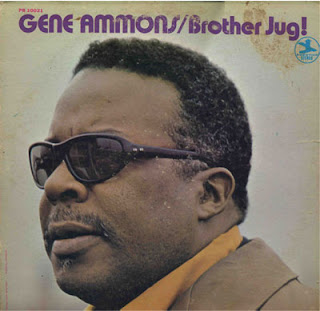
A really dope, fairly rare soul-jazz set from just before the point where soul-jazz turned once and for all into fusion, 1970's "Brother Jug" is very much an album of its time. "Brother Jug" is one of Ammons' better albums released soon after the tenor saxophonist's release from a seven-year prison sentence. Ammons' playing on this album has an unaccustomed grit; even on ballads like "Didn't We," there's an R&B-style honk to Ammons' tone that suits the funky, electric arrangements well. Featuring other legendary musicians like Billy Butler on guitar and Bernard Purdie on drums, "Brother Jug" is a great score.