Wednesday, October 8, 2008

THERE IT IS


From their erotically charged album covers to their grinding, bass-heavy grooves, the Ohio Players were one of the highest profile funk bands of the 1970s. What made the Players great was how well-balanced they were--fine musicianship, a blend of fiercely syncopated rhythms with pop accessibility, and a sassy, outrageous attitude (thanks, in large part, to the animated vocals of Leroy "Sugarfoot" Bonner). Though the Players released several records for the Detroit-based Westbound label in the early part of their career, they really hit their stride when they signed to Mercury, where they released a string of charting albums, including the funk classics FIRE and HONEY.

Here's a previously unreleased gem from their catalog called "There It Is."

Friday, October 3, 2008

GET ME BACK ON TIME (ENGINE #9)


The Ultimate Breaks & Beats series is a 25-volume collection of songs that serve as the backbone to the world of sampled music. Consisting of music released during the 1960s, 70s, and 80s, this series has been done and redone; released and re-released. Available in 7" format, 12" EP, CD, and even mp3, the UBB series has also served as the muse for compilations that followed including the Strictly Breaks series. Those most notorious for sampling these originals include a who's who of Rap's best such as DJ Premier, Large Professor, The Bomb Squad, Pete Rock, Dr. Dre, and Marley Marl. Up until now, these songs were never available as instrumental-only and producers have been forced to work around the grunts, screams, and crooning of these classics to isolate that perfect drum beat, breakdown, or sample. Until now.

The Ultimate Breaks & Beats Instrumentals, faithfully recreated by Brooklyn's monstrous El Michels Affair, features thirteen of the most popular cuts from the UBB series as start to finish instrumentals. It's a new day for fans of the break beat.

Below, their startlingly pitch-perfect rendition of Wilson Pickett's "Engine Number 9."

Wednesday, September 24, 2008

BROASTED OR FRIED


On the 2000 LP "Broasted or Fried: Latin Breakbeats, Basslines, and Boogoloo", compiler James Maycock dug out a fantastic selection of Latin tunes recorded between 1968 and 1975 that were specifically influenced by black music such as Roberto Roena's "Canta Una Simple", a direct cover version of Sly and The Family Stone's "Sing A Simple Song". Many of the songs here were recorded in New York at a time when the Hispanic and black communities were undergoing similar pressures and could easily find common ground. Stars like Bobby Valentin ("Use It Before You Lose It"), The Latinaires ("Creation"), Tito Puente (whose track "Black Brothers" illustrates his long-standing connections with black music and culture), Herbie Mann ("Jungle Fantasy") and Monguito Santamaria ("Groovetime") all draw on funk and soul and combine them with Afro-Cuban, Afro-Brazilian and other Latin styles to create powerful, floor-friendly records.

Below, an MP3 of The St. Vincent Latinaires covering Willie Bobo's "Broasted or Fried," with a massively nasty drum break at the head.

Monday, September 15, 2008

COLD DUCK TIME


Rusty Bryant (1929-1991) was one of the funkier saxophonists of the late 1960s/early ’70s when electronic soul-jazz was at the height of its popularity. He was equally skilled on tenor and alto, also utilizing the Varitone sax on a couple of his albums during his peak years.

1970's "Soul Liberation" reconvenes the players from Earland's classic 1969 release "Black Talk!", with Bryant taking over the tenor spot from "Black Talk!"'s Houston Person. Earland does a superb job of building tension and driving dynamics into the mix. Teamed with Muhammad, he unleashes an irresistible juggernaut of jackhammering syncopation. Sparks, always a welcome presence, contributes his earthy yet sophisticated rhythm and bop.

Below, "Cold Duck Time."

Sunday, August 24, 2008

YES WE CAN CAN


When the Pointer Sisters burst onto the national scene with “Yes We Can Can” in mid-1973, they seemed completely different from any other popular group of the time. The Oakland, Calif. — born sisters — Anita, Ruth, June and Bonnie — clearly had some gospel music in their background and oodles of “soul,” but they also had a look and sound that hearkened back to the '30s and '40s, with echoes of Billie Holiday and the great female big-band singing groups. Nobody was going to confuse these girls with The Supremes. And “Yes We Can Can” was the perfect vehicle for their intricate harmonies and upbeat attitude: The song, written by the great New Orleans producer/songwriter Allen Toussaint, had been a minor R&B hit for Lee Dorsey in 1970 (Dorsey had previously had hits with such Toussaint numbers as “Ya-Ya,” “Working in the Coal Mine” and “Get out of My Life Woman”), but it was essentially unknown in rock music circles. The Pointer Sisters, it turned out, successfully bridged the white and black music worlds, and “Yes We Can Can” was precisely the kind of optimistic anthem of harmony and brotherhood that seemed to strike a universal chord at a politically volatile and divisive time.

The Pointer Sisters first sessions were cut for Atlantic Records, but that label was interested in a more traditional “soul” sound, and neither the group nor the label were pleased with the results. So in early 1972, Rubinson signed the band to a management deal, and it was around that time, too, that sister Ruth joined the group. That fall, they went into Pacific Recording and started work on the group's first album, beginning with “Yes We Can Can,” “Jada” and “Cloudburst” (all of which they had demoed before the Atlantic Records debacle). As fate would have it, midway during the recording of the album, Rubinson and Catero left Pacific Recording for good and moved their operation to Studio A of Wally Heider Recording in San Francisco, the hottest facility in town. Studio A, too, was equipped with a Quad Eight console, but by '72, Heider's had switched from Ampex 16-tracks to 3M models. The studio was a famously good-sounding tracking space, with a nice complement of high-quality microphones and a great-sounding echo chamber.

Clearly the formula worked. The album was released in March 1973 to immediate acclaim, and an edited version of “Yes We Can Can” stormed the airwaves that summer, lodging at Number 11 on Billboard's pop chart and Number 12 on the R&B chart. This started a chart run for the Sisters (and Rubinson) that included “Fairytale,” “How Long (Betcha Got a Chick on the Side),” “You Gotta Believe” and “Having a Party.”

The track has been sampled by acts like Big Daddy Kane ("3 Forties and a Bottle of..."), De La Soul ("Breakadawn"), NWA ("8 Ball"), and Pete Rock ("Escapism.")

Friday, August 15, 2008

R.I.P. JERRY WEXLER


Legendary record producer Jerry Wexler passed away today, August 15. Although he didn't quite invent rhythm & blues music, Wexler is credited with coining the term. The influential label exec and producer was instrumental in helping to popularize R&B in general and the careers of some of its greatest practitioners, from Ray Charles to Otis Redding to Aretha Franklin. Starting at Atlantic Records in the '50s, he was present when Charles invented modern soul music with "I Got a Woman." He signed a distribution deal with a small Memphis label that allowed it to grow into Stax, the '60s home of Redding, Sam & Dave, Isaac Hayes, and other soul greats. He popularized the use of the FAME Studio in Muscle Shoals, Ala. (name-checked in Lynyrd Skynyrd's "Sweet Home Alabama") by recording Aretha Franklin's landmark album I Never Loved a Man the Way I Love You in 1967 -- simultaneously rescuing the future Queen of Soul from a doldrum career singing jazz-pop standards. He went on to sign groups as diverse as Led Zeppelin, Dire Straits, and the B-52s, and to produce for Bob Dylan, Etta James, Kim Carnes, and George Michael. Others he worked with included Dusty Springfield (on her classic Dusty in Memphis album), Wilson Pickett, and Willie Nelson.

REST IN PEACE, JERRY!!!

Monday, August 11, 2008

R.I.P. ISAAC HAYES


(Courtesy of allmusic.com)

It's been a tough year. First, Jimmy McGriff. Then Bo Diddley. And now, the "Black Moses" himself, Isaac Hayes, dead at 65.

He was perhaps best known for "Theme from Shaft"--with its riveting orchestration, definitive guitar play and signature sensual baritone vocals, the song for the 1971 movie "Shaft" not only became one of pop music's iconic songs, but also the defining work of Hayes' career.

Yet many don't realize that few figures exerted greater influence over the music of the 1960s and 1970s than Isaac Hayes; after laying the groundwork for the Memphis soul sound through his work with Stax-Volt Records, Hayes began a highly successful solo career which predated not only the disco movement but also the evolution of rap.

His influence also extended beyond music. His trademarked bald head, full beard and muscular frame, often adorned with a multitude of gold chains, made him a fashion trendsetter at a time when most of his contemporaries were sporting blowout Afros. He was also a symbol of black pride, and an activist for civil rights.

Hayes was born on August 20, 1942, in Covington, TN; his parents died during his infancy, and he was raised by his grandparents. After making his public debut singing in church at the age of five, he taught himself piano, organ and saxophone before moving to Memphis to perform on the city's club circuit in a series of short-lived groups like Sir Isaac and the Doo-Dads, the Teen Tones, and Sir Calvin and His Swinging Cats. In 1962, he began his recording career, cutting sides for a variety of local labels.

Two years later, Hayes began playing sax with the Mar-Keys, which resulted in the beginning of his long association with Stax Records. After playing on several sessions for Otis Redding, Hayes was tapped to play keyboards in the Stax house band, and eventually established a partnership with songwriter David Porter. Under the name the Soul Children, the Hayes-Porter duo composed some 200 songs, reeling off a string of hits for Stax luminaries like Sam & Dave (the brilliant "When Something Is Wrong With My Baby," "Soul Man," and "Hold On, I'm Comin'"), Carla Thomas ("B-A-B-Y,") and Johnnie Taylor ("I Got to Love Somebody's Baby," "I Had a Dream").

In 1967, Hayes issued his debut solo LP Presenting Isaac Hayes, a loose, jazz-flavored effort recorded in the early-morning hours following a raucous Stax party. With the release of 1969's landmark Hot Buttered Soul, he made his commercial breakthrough; the record's adventuresome structure (comprising four lengthy songs), ornate arrangements, and sensual grooves -- combined with the imposing figure cut by his shaven head, omnipresent sunglasses, and fondness for gold jewelry -- made Hayes one of the most distinctive figures in music.

After a pair of 1970 releases, The Isaac Hayes Movement and To Be Continued, he reached his commercial zenith in 1971 with the release of Shaft, the score from the Gordon Parks film of the same name. Not only did the album win Hayes an Academy Award for Best Score (the first African-American composer to garner such an honor), but the single "Theme From 'Shaft,'" a masterful blend of prime funk and pre-rap monologues, became a number one hit.

After 1971's superb Black Moses and 1973's Joy, Hayes composed two 1974 soundtracks, Tough Guys and Truck Turner (in which he also starred). By 1975, relations with Stax had disintegrated following a battle over royalties, and soon he severed his ties with the label to form his own Hot Buttered Soul imprint. Although both 1975's Chocolate Chip and 1976's Groove-a-Thon went gold, his records of the period attracted considerably less attention than prior efforts; combined with poor management and business associations, Hayes had no choice but to file for bankruptcy in 1976.

After the 1977 double-LP A Man and a Woman, recorded with Dionne Warwick, Hayes began a comeback on the strength of the hit singles "Zeke the Freak," "Don't Let Go" and "Do You Wanna Make Love." Following the success of his 1979 collection of duets with Millie Jackson titled Royal Rappins, he issued a pair of solo records, 1980's And Once Again and 1981's Lifetime Thing before retiring from music for five years. After returning in 1986 with the LP U Turn and the Top Ten R&B hit "Ike's Rap," Hayes surfaced two years later with Love Attack before again dropping out of music to focus on acting.

In 1995, fully enshrined as one of the forefathers of hip-hop and newly converted to Scientology, Hayes emerged with two concurrent releases, the vocal Branded and instrumental Raw and Refined. Under the official name Nene Katey Ocansey I, he also served as a member of the royal family of the African nation of Ghana while continuing simultaneous careers as an actor, composer, and humanitarian. In 1997, Hayes provided the voice of what was slated to be a one-time character on the animated series South Park -- Jerome "Chef" McElroy, the main characters' favorite school cafeteria worker. Hayes was an instant hit, and Chef became a regular character on the show, lending advice and, oftentimes, breaking into songs that gently sent up Hayes' image as one of R&B's ultimate love men.

He also remains one of the most sampled artists ever. Tracks like "Walk on By," The Look of Love," and "Joy" have literally been sampled hundreds of times, by artists ranging from Portishead to Kool G Rap, from Ultramagentic MC's and LL Cool J.

Thursday, August 7, 2008

THE PJ'S FROM AFAR (RAEKWON WITH EL MICHELS AFFAIR)


After dropping two extremely dope 7 inch singles covering Wu-Tang classics, the El Michaels Affair (a loose collective of musicians affiliated with the monstrous Truth & Soul label in Brooklyn) deliver a nicely filled 12" featuring the legendary Raekwon on the title track. With a raw, gritty sound, and sparse, tasteful production, this is the kind of forward thinking hip-hop that is short on supply in today's bling-bling era. The pairing of a live band with a hip-hop artist is something the Scion label have been effectively doing since 2006, with previous entries from Connie Price & The Keystones with Big Daddy Kane and Rhythm Roots All Stars with Ghostface Killah. Amazing stuff.

Sunday, August 3, 2008

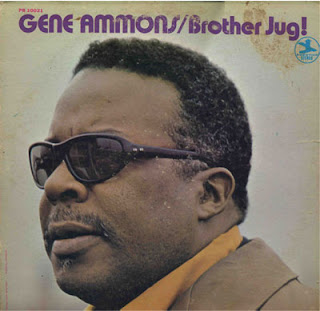
SON OF A PREACHER MAN


A really dope, fairly rare soul-jazz set from just before the point where soul-jazz turned once and for all into fusion, 1970's "Brother Jug" is very much an album of its time. "Brother Jug" is one of Ammons' better albums released soon after the tenor saxophonist's release from a seven-year prison sentence. Ammons' playing on this album has an unaccustomed grit; even on ballads like "Didn't We," there's an R&B-style honk to Ammons' tone that suits the funky, electric arrangements well. Featuring other legendary musicians like Billy Butler on guitar and Bernard Purdie on drums, "Brother Jug" is a great score.

Monday, July 28, 2008

SLIPPING INTO DARKNESS


Dear Readers,

First off: sincere apologies for the looooong delay in posting. As most of you know, I have relocated from Los Angeles to the glorious Pacific Northwest (Portland, OR to be precise) and haven't had much time to dig here. However, I have uncovered a couple gems, and, naturally, it's my honor and privilege to share. So, let's get back to it!

"Upendo Ni Pamoja" marked Ramsey Lewis' third album for Columbia and the first to feature the Ramsey Lewis Trio. The most famous members had gone on to other successes. Red Holt and Eldee Young were signed to Atlantic as Young-Holt Unlimited, and of course later member Maurice White founded Earth, Wind and Fire. "Upendo Ni Pamoja" has the rhythm section of bassist Cleveland Eaton and drummer Morris Jennings. Unlike many early-'70s sets, this LP is a great blend of funky grooves and soulful spiritualism, stripped down into a sound that's one of his leanest and cleanest of the decade.

Personnel: Ramsey Lewis (piano, Fender Rhodes piano); Cleveland Eaton (acoustic & electric basses); Morris Jennings (drums, percussion).

"Slipping Into Darkness" below, which was also sampled by Jay-Z for "Murdergram."

Wednesday, June 25, 2008

HARLEM HENDOO


You'll never mistake Al Hirt for Blue Mitchell, but Soul in the Horn is nevertheless a surprisingly genuine and expressive detour into soul-jazz that captures an energy otherwise absent from the trumpeter's ho-hum catalog. The slinky "Harlem Hendoo" is the standout -- sampled by De La Soul for the Buhloone Mindstate cut "Ego Trippin Pt. 2"; it's also the reason why the record is so scarce and commands such high prices among crate diggers. No less soulful is the opening cover of Booker T. & the MG's "Honey Pot" or the bluesy "Sweetlips". It's a shame Hirt never made another record quite like Soul in the Horn -- with the right material and the right intentions, his talent was fierce. "Harlem Hendoo" below.

Monday, June 23, 2008

BURNING SPEAR


Fabulous, simply fabulous soul jazz instrumentals, with an equally fantastic line-up of Chess staff musicians. Bassist Richard Evans produced for Marlena Shaw, Ramsey Lewis, Brother Jack Mc Duff, Odell Brown and many other Chess/Cadet artists. From 1966 to 1971 the Soulful Strings made six or seven LPs. The Soulful Strings were in fact the Chess house band; Lennie Druss (flute, woodwinds) Charles Stepney (organ/vibes), Phil Upchurch (guitar), Cleveland Eaton (bass) Bobby Christian/Billy Wooten (vibes).

The centerpiece of the record is the first song--"Burning Spear"-- which is by far Richard Evans best known composition. Since he recorded it with the Soulful Strings it was covered by Jimmy Smith, Joe Pass, S.O.U.L., Salsoul Orchestra, and then again by Evans during the disco era when it was a hit all over again. Opening with the sounds of the kalimba (a frequent ingredient in Evans productions of the era), the tune is soon stated by Lennie Druss’ flute, followed immediately by a pounding drum beat, which never lets up. ‘Burning Spear’ really is a Druss feature (proving once again that aside from Evans himself, Druss really was one of the biggest parts of the sound of the Soulful Strings) and the sections of the song where the vibes are playing in unison with the flute are excellent. The cut also features a great guitar solo by Phil Upchurch.

Tuesday, June 3, 2008

R.I.P. BO DIDDLEY


Courtesy allmusic.com

"I was born one night about twelve o’clock
I come into this world playing a gold guitar
My papa walkin’ around stickin’ out his chest
Hollerin’ “Mama, this boy is gonna be a mess”

– “The Story of Bo Diddley,” 1959

I hate to have to post two consecutive "R.I.P." blogs, but when I heard that Bo Diddley passed away at age 79 from heart failure, there was no other choice.

Bo Diddley was a bonafide legend, a titan among mere mortals, a braggart who made Little Richard seem polite, the biggest and baddest of all the original rock & rollers. Nothing about the man was small – not his size, not his music, not his influence, not the myth that he cheerfully, ceaselessly created on song after song, many bearing his name somewhere in the title. Like so much in his music, the tale of his birth that he spun “The Story of Bo Diddley” was tall. Bo never met his father, a minor factual detail that doesn’t really matter when considering the legend of Bo Diddley, the man who was born as Ellas Bates, adopted the surname McDaniel when being raised in Chicago by his mother’s cousin Gussie and eventually became known as the larger than life Bo Diddley, a name he took when he was playing the streets of Chicago with a makeshift band with his right-hand man Jerome Green in tow. With Jerome shaking maracas, Bo created the beat that bore his name, a variation of the rhythm known as Hambone, a shave-and-a-haircut beat that can be traced back to slave plantations and was widely played in vaudeville and minstrel shows during the early part of the 20th Century. How Bo learned the Hambone is as cloudy as the origin of his name, but that murkiness only added to the wallop of music: he seemed to come out of nowhere with his mighty beat, sounding quite unlike his New Orleans peers Fats Domino and Little Richard or his Chess labelmate Chuck Berry.

That oversized, swaggering beat quickly became widely imitated, with Buddy Holly’s “Not Fade Away” and Ronnie Hawkins’ version of “Who Do You Love” being the first inkling of the tidal wave of Diddley-inspired rocking to follow. As the ’60s rolled on, band after band rode Bo’s train: the Rolling Stones’ recorded “Mona” and gave Muddy Waters’ “I Just Want To Make Love To You” a Bo Beat, the Pretty Things took their name from one of his singles, the Who’s “Magic Bus” was fueled by Diddley, the Yardbirds covered Bo’s “Here ‘Tis” and “I’m A Man” picking up on the wild modernity of his recordings, while Captain Beefheart & His Magic Band tapped into his flat-out weirdness in their cover of “Diddy Wah Diddy.” This was hardly the end of Bo’s influence, either, as the New York Dolls’ sped through “Pills” on their debut, Dr. Feelgood found the core of their gritty, nasty rock & roll via “I Can Tell,” the Clash had Bo open for them on an American tour, while two Georges – Michael and Thorogood – brought the Bo Diddley beat into ’80s with their hits “Faith” and “Bad to the Bone,” while the man himself was part of a Nike ad campaign in the early ’90s, around the time Paul McCartney revived “Crackin’ Up” for his Russian-only oldies album.

This laundry list of covers, influence and achievements suggest that Bo tore up the charts in the ’50s and ’60s, which isn’t really the case: he had hits but unlike Fats, Little Richard, Chuck Berry or Ray Charles, he didn’t quite cross over to the pop mainstream. During the ’50s, he often topped the Black Singles Billboard chart, but never racked up pop hits like his peers. Why didn’t Bo have more pop hits? Maybe because he had a gritty blues backbone to his music, but Bo was no bluesman, at least according to the conventional definition of the word. Even with “I’m a Man” and “Before You Accuse Me” to his credit, Bo wasn’t backwoods, he was a creature of the city, jive talking and hustling, cranking up his amps until they burst, wrapping his thick guitar in waves of tremolo, singing about cops and robbers and roadrunners, threatening to go kick the ass of Kruschev. Compared to the frenetic teenage rhythms of Little Richard or the school day poetry of Chuck Berry, this was adult music, filled with rude humor and good-natured menace, hinting at relations and situations far beyond the average rock & roll song of the ’50s.

If he didn’t consciously mythologize America the way that Chuck did, he nevertheless captured how America felt in the ’50s and ’60s. Appropriate for a guitarist best known for a rhythm, Bo blurred barriers everywhere: he had female guitarists (Lady Bo and The Duchess) in his band when rock & roll truly was a man’s game, he captured the rhythm of streets slang, he had an understanding that records were different than live performance, how groove and feel could trump songs on a 45. Sonically, his singles pushed barriers, filled with fuzz tones and elastic guitars, galloping pianos, sawing violins and call-and-response vocals with Jerome. Listen to a collection of his Chess/Checker singles – the best currently being Universal UK’s 2006 set The Story of Bo Diddley – and the depth and range is astonishing, proving that there was far, far more to Bo than his patented beat and walloping gut-bucket blues. That variety kept him going through the ’60s even when he fell off the charts and it also meant that he could ease into dirty psychedelic funk-rock in the ’70s (chronicled on Raven’s 2004 set Tales from the Funk Dimension). Similarly, Bo’s humor – which, like his music, was multi-dimensional, ranging from one-liners and dirty jokes to bizarre absurdities – could overshadow what a great songwriter he was. That above list of covers illustrates that he has plenty of rock & roll standards to his credit (and to that list Mickey & Sylvia’s “Love is Strange,” which he penned but did not release; it surfaced this past year on Hip-O Select’s tremendous I’m a Man: The Chess Masters, 1955-1958) but his catalog is filled with lesser-known gems, sides like the strange funk of “Craw-Dad” and the cool strut of “Walkin’ and Talkin’” or the furious “You All Green.”

Bo also cut some fine straight-up LPs, like "Bo Diddley is a Gun Slinger" or the live "Bo Diddley’s Beach Party," which is as raw and exciting as any live early rock & roll record can be. It, sadly, has never hit CD, nor has a lot of other Bo Diddley’s Chess/Checker sides. The lack of reissues only proves that all these years later, it’s hard to push Bo Diddley into any particular box. He’s harder to categorize and package than any other early rock & roller, but the key to his greatness is that he was too big to easily wear any one label. And that’s the reason why Bo Diddley kept writing songs about himself: He was too big to be contained in one or two three-minute songs. Thankfully, Bo left behind a whole mess of them behind in a legacy that has few peers.
(Courtesy of allmusic.com)


Below, the track "Black Soul" from Bo's 1970 LP, "Black Gladiator." Rest in peace, Bo!

Thursday, May 29, 2008

R.I.P. JIMMY MCGRIFF


Back in the ’60s, there wasn’t as big a divide between jazz and R&B as there is today. Sure, currently there is that soft netherworld of quiet storm, a place where smooth jazz and slick R&B intertwine, but back then jazzmen could make people dance, cutting hot singles that rocked the jukebox and climbed the charts, usually Billboard’s R&B-dominated “Black Singles” chart, but often crossing over too. Of these musicians, few were as successful as organist Jimmy McGriff, who died May 24, 2008 at the age of 72. McGriff played to a larger audience because he was all about rhythm and soul, churning out thick, funky, infectious grooves on his Hammond.

This facility with the groove led McGriff to label himself as a bluesman, and there was a fair amount of truth to that. He was rooted in the blues, and compared to such contemporaries as Jimmy Smith – never mind Larry Young, who was in a different sphere entirely – he never quite delved into long, liquid solos, nor did he have consciously-crafted pop crossovers like Peter & The Wolf, either. McGriff, like his peer Richard “Groove” Holmes was all about feel, a feel that was tangible in the earthy, funky grooves that dominated his playing, a feel that was palpable even when he did a session devoted to Count Basie’s swing.

He retained that funky feel even when his records reflected the styles of the time, as they did in the ’70s when "Electric Funk", "Groove Grease" and "Soul Sugar" had fuzz guitars and deep funky grooves that later were mined for samples (they also were graced by some seriously sexy album covers). Such an emphasis on samples is accurate, as McGriff was always about rhythm, but usually McGriff’s music was old-fashioned funk, more about the gritty groove instead of James Brown vamps. This is best heard on those 45s that climbed the charts and earned heavy rotation on ’60s jukeboxes, ranging from 1962’s “I’ve Got a Woman” to 1969’s “The Worm,” sides that defined the sound of soul-jazz in the ’60s and beyond.

Of course, Jimmy McGriff went far beyond the ’60s, or those turn of the ’70s cult classics. He continued to play and record well into the new millennium, putting out LPs on Groove Merchant in the ’70s, CDs on Milestone and Telarc in the ’80s and ’90s. He wound up with a lot of records, most of them easy to enjoy, as almost all of them wound up being true to that blues-saturated soulful sound he created in the ’60s. It’s a sound that still feels soulful and right, whether it’s on the original records or samples or in the legions of younger musicians following McGriff’s footprints.

Below, his famous, oft-sampled track "Blue Juice", which has been sampled by Black Sheep ("Pass the 40") and King T ("Time to Get Out"), to name a few. RIP Jimmy!

Thursday, May 22, 2008

99 CENT STORE ANSWERING MACHINE MESSAGES


Friends,

Normally I only post soul/funk/jazz stuff on here, but this is just too funny not to share. Bare with me.

You see, dear readers, back in the late twentieth century we had things called "land lines," which referred to your home telephone line. When we moved into the Haynes Street house in 2003, we were assigned a "home telephone number," which, in the age of cellphones, was rarely used. We mostly just kept it going for emergencies and for the internet/DSL line.

We noticed quickly after we moved in that the phone would ring fairly often--random calls from people asking for the "99 Cent Store." We'd all look at each other confused, but after another good 20-30 phone calls, we realized that a 99 Cent Store had either a) once had our same number, or b) the phone company had the wrong number listed for the 99 Cent store. Either way, neither Mac nor I felt like doing anything about it. Let THEM fix it.

Needless to say, these calls were a source of endless entertainment. Sometimes we'd pick up the phone (as a fictional 99 cent store employee) and have conversations with them; sometimes we'd ignore the calls. Sometimes they'd call at night, some on lazy Sunday afternoons, and, others at 2 or 3 in the morning. Sometimes, when people asked for the address of the store, we'd tell them that we were located on the corner of Riverside and Sepulveda (an intersection that doesn't exist here in LA, but ALMOST does. LA people will know what I mean.) Anyway, mostly we'd just laugh. It was all harmless fun. The months (and years) rolled on, and it just became a staple of life at Haynes Street.

Knowing all this: I am sharing with you the two very best voicemails people left (for the 99 Cent Store) from our house. At one time, we had about a collection of about 10-12 phone calls; unfortunately, these were the only two that survived.

Message #1: An infuriated woman calls complaining about the store's seemingly misprinted (or misread) "9 days a week" policy. (Right in the middle of her rant, the machine cuts her off. My favorite part.)

Message #2: The cashier didn't give him his change. Simple. (Hello? Hello Hello? Damn, she gave me everything but my mothafuuuucking moneeeeeeeeeyyyyyyyy)

These get funnier and funnier the more you think about them and hear them, and I just hope they make you all laugh as much as they did us. They couldn't have been written any better. Big ups to Mac and Nate for saving these before they were lost.

The volume's a tad low, so make sure you can hear 'em proper. Enjoy. They start about :07 in.